
Converting a 200-year-old property into three residential apartments while retaining a thriving business on the ground floor represents one of the most practical yet challenging solutions to Ireland's acute housing shortage. The project by Jas Rait and Tanya Comber on Dublin's vibrant Camden Street demonstrates how above-shop conversion housing can activate long-vacant upper floors in heritage buildings while maintaining the commercial vitality that defines urban neighborhoods. This approach has gained significant traction as government incentives and planning reforms encourage developers to look upward rather than outward for housing solutions.
The conversion of spaces above shops into residential apartments addresses a critical gap in Ireland's housing market. Rather than demolishing historic structures or leaving valuable upper floors vacant, this strategy preserves architectural character while adding much-needed housing units to city centers. The Camden Street project illustrates both the tremendous potential and the substantial obstacles involved in executing such conversions, from navigating structural challenges to balancing the needs of existing businesses with new residential tenants.
Understanding this mixed-use development model is essential for policymakers, investors, and homebuyers alike. The incentives available, the practical challenges involved, and the long-term viability of such projects shape the future of urban housing in Ireland. The experiences of Jas Rait and Tanya Comber provide valuable insights into what works, what doesn't, and how communities can benefit from thoughtful urban regeneration.
Project Overview and Location Context
Camden Street in Dublin 2 has long been recognized as one of the city's most creative and commercially vibrant neighborhoods. The street's eclectic mix of independent shops, restaurants, and businesses creates a distinctive character that attracts both residents and visitors. When Jas Rait and Tanya Comber decided to convert their 200-year-old property, they faced a
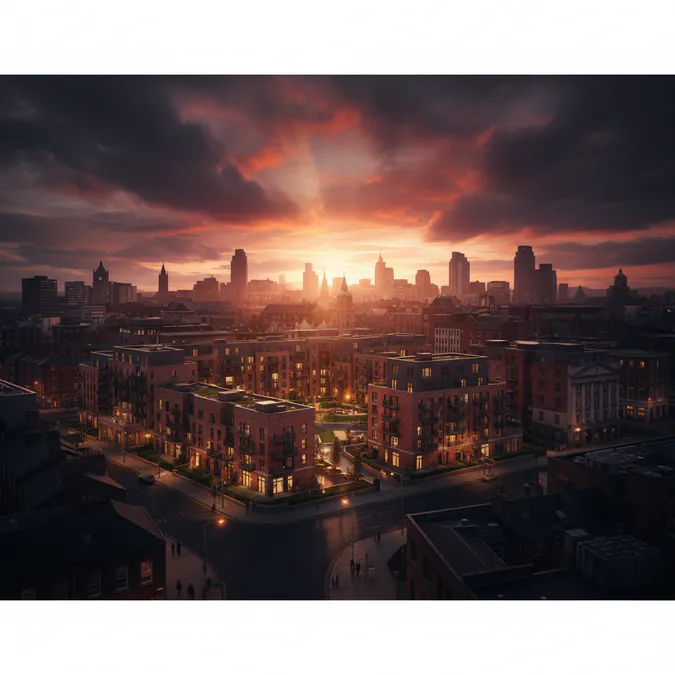
The decision to undertake this conversion was not driven by short-term investment returns but by a long-term commitment to the neighborhood. As Tanya Comber explained, "We are here for good and we are not going anywhere. There is still a great sense of community here on the street." This philosophy shaped every aspect of the project, from design choices to construction management. Rather than viewing the ground-floor business as an obstacle to residential development, the developers saw it as an integral part of the building's identity and the street's ecosystem.
The property itself presented both advantages and challenges. Its age and heritage status meant that any conversion had to respect the building's historical character while meeting modern residential standards. The developers chose to embrace this constraint creatively, adopting what they described as a "funky" aesthetic that reflected Camden Street's bohemian spirit. This design philosophy would influence decisions throughout the project, from material selection to spatial planning.
Architectural and Structural Challenges
Converting a 200-year-old building into modern residential apartments is far more complex than new construction. The structural systems, materials, and layouts of historic properties were designed for entirely different purposes and occupancy patterns. In the case of the Camden Street property, the developers had to address multiple interconnected challenges simultaneously.
One of the primary obstacles was maintaining business operations on the ground floor while conducting extensive structural work above. Unlike vacant properties where construction can proceed uninterrupted, this project required careful coordination to ensure that the cloud computing business and shop could continue serving customers throughout the renovation. This meant phasing work strategically, managing noise and dust, and ensuring that utilities remained functional during the conversion process.
Structural integrity presented another significant challenge. Historic buildings often have load-bearing walls, uneven floors, and foundations that require careful assessment before major modifications. The developers had to work with structural engineers to understand the building's existing systems and determine how to safely insert new residential units without compromising the structure or the ground-floor commercial space.
Insulation and thermal performance standards for modern residential buildings are far more stringent than those of 200-year-old structures. The developers initially considered installing heat pumps to meet energy efficiency requirements but ultimately opted out due to space constraints within the historic building envelope. Instead, they invested heavily in high-quality insulation throughout the residential units, a decision that required careful planning around the building's existing architectural features and window placements.
Design Philosophy and Aesthetic Integration
The developers' approach to design reflected a deep understanding of Camden Street's character and identity. Rather than imposing a generic contemporary aesthetic, they chose to embrace what they called a "funky" design philosophy that honored the street's creative reputation. This meant making deliberate choices about materials, colors, finishes, and spatial arrangements that would feel authentic to the neighborhood while meeting modern residential standards.
This design philosophy extended beyond mere aesthetics. It represented a commitment to creating homes that felt connected to their urban context rather than isolated from it. Residents of the three new apartments would inherit not just a residential unit but a connection to a vibrant commercial street with established community networks and cultural identity.
The decision to retain the ground-floor business as an integral part of the building's identity influenced interior design choices as well. Rather than creating a stark separation between commercial and residential uses, the developers sought to create a cohesive whole where the building functioned as a mixed-use asset. This required thoughtful attention to soundproofing, separate access points, and spatial organization that would allow both uses to thrive independently while contributing to the building's overall character.
Government Incentives and Financial Framework
The financial viability of above-shop conversion housing depends significantly on government support mechanisms. Ireland has implemented several programs specifically designed to encourage such projects, recognizing their potential to address the housing crisis while preserving commercial vitality and historic character.
The Living City Initiative provides substantial tax relief for urban refurbishments. Following the October 2025 budget increase, the maximum tax relief rose to €300,000, up from the previous limit of €200,000 that applied to the Rait and Comber project [Source: Irish Times]. This tax relief is calculated on qualifying expenditure after deducting any grants received, creating an important interaction between different support mechanisms.
The Vacant Property Refurbishment Grant Scheme offers up to €140,000 in direct grants for converting vacant above-shop spaces into homes, with the amount depending on the number of units created. These grants help offset the substantial costs associated with structural adaptation, compliance with modern building standards, and the complexities of working within historic buildings.
Despite these incentives, the economics of above-shop conversions remain challenging. Jas Rait highlighted a critical issue facing potential investors: "We've been here for so long that for us to stay here and invest for the next few decades is fine. But if you're an investor and you've got 8 percent interest on commercial finance, and you're looking to do this to flip it, then it doesn't make sense." At current interest rates, short-term investors cannot achieve adequate returns on the substantial upfront investment required, making these projects viable primarily for long-term owners with existing businesses or deep community ties.
Mixed-Use Development as a Housing Solution
The above-shop conversion model represents a crucial strategy in Ireland's response to its housing crisis. Rather than requiring greenfield development or large-scale demolition and reconstruction, mixed-use development activates existing building stock in established neighborhoods. This approach offers multiple benefits that extend beyond simply adding housing units.
First, mixed-use development preserves commercial vitality in city centers. Ground-floor retail and service businesses create foot traffic, economic activity, and the distinctive character that makes urban neighborhoods attractive. By adding residential units above these businesses, the model ensures that commercial spaces remain economically viable while residential density increases.
Second, this approach respects and preserves architectural heritage. Many of Ireland's most vibrant neighborhoods contain historic buildings that would be difficult or impossible to replace. Converting these buildings for mixed-use purposes maintains their character while adapting them for contemporary needs.
Third, mixed-use development supports community sustainability. Residents living above shops and businesses create natural surveillance and activity patterns that enhance safety and vitality. The proximity of housing to commercial services, employment, and cultural amenities reduces transportation needs and supports walkable neighborhoods.
The Camden Street project exemplifies these benefits. The three new apartments add housing capacity to an established neighborhood with excellent public transportation, existing commercial services, and established community networks. Residents gain immediate access to shops, restaurants, and services on their own street, while the ground-floor business benefits from increased foot traffic and residential customers.
Balancing Commercial and Residential Needs
Successfully integrating residential and commercial uses within a single building requires careful attention to the distinct needs of each function. The developers had to address practical concerns including noise transmission, separate access points, utility management, and parking or loading arrangements.
Soundproofing between the ground-floor business and residential units above is essential for tenant satisfaction and long-term viability. Historic buildings often have less effective sound isolation than modern construction, requiring additional investment in acoustic treatments, resilient flooring systems, and structural isolation techniques.
Separate access points prevent residential tenants from passing through commercial spaces and vice versa. This requires careful spatial planning to ensure that each use has independent entry, circulation, and utility connections. In a 200-year-old building, achieving this separation while respecting the existing structure and maintaining the building's character presents significant design challenges.
Utility management becomes more complex in mixed-use buildings. Water, electricity, heating, and waste management systems must serve both commercial and residential uses with appropriate metering and control. The developers' decision to rely on high insulation rather than heat pumps reflects the practical constraints of retrofitting mechanical systems into historic buildings while maintaining separate controls for different uses.
Market Impact and Housing Supply
The broader significance of the Camden Street project extends beyond the three apartments created. It demonstrates a viable model for addressing housing shortages in established urban neighborhoods where land is scarce and development costs are high.
Recent data supports the growing importance of this approach. The Housing Agency reported a 20% rise in vacant property conversions, with grants awarded for commercial-to-residential conversions increasing amid the ongoing housing crisis. Dublin City Council has approved five new mixed-use projects on Camden Street alone, focusing on retail retention and apartment additions to heritage buildings.
These conversions contribute meaningfully to rental supply in city centers where housing demand is highest. Rather than requiring new infrastructure development or extensive site preparation, above-shop conversions utilize existing buildings and established neighborhoods. This makes them more cost-effective and faster to deliver than greenfield development, though still requiring substantial investment and careful project management.
The viability of such projects depends on the commitment of long-term owners like Jas Rait and Tanya Comber. Their willingness to invest in their property and neighborhood, combined with government incentives and planning support, creates the conditions for successful mixed-use development. However, the economics remain challenging for short-term investors, suggesting that policy frameworks may need further refinement to encourage broader participation.
Lessons and Future Implications
The Camden Street conversion offers several important lessons for policymakers, developers, and communities considering similar projects. First, long-term ownership and community commitment are essential for success. Projects driven by genuine attachment to place and neighborhood tend to make better design decisions and navigate challenges more effectively than those driven purely by financial returns.
Second, design quality matters significantly. The developers' commitment to embracing Camden Street's "funky" character rather than imposing generic contemporary design created a project that feels authentic and integrated into its context. This approach likely enhances both the appeal to residents and the building's long-term value.
Third, government support mechanisms are necessary but not sufficient. While the Living City Initiative and Vacant Property Refurbishment Grant Scheme provide crucial financial assistance, the economics of above-shop conversions remain challenging at current interest rates and construction costs. Policymakers may need to consider additional incentives or financing mechanisms to encourage broader participation.
Fourth, careful project management and coordination are essential when maintaining commercial operations during residential conversion. The complexity of managing construction while keeping a business operational requires experienced professionals and realistic timelines.
The future of Ireland's housing supply likely depends significantly on the success and replication of projects like the Camden Street conversion. As the Department of Housing, Local Government and Heritage continues to support mixed-use development through various incentive programs, the experiences of early adopters will inform policy refinement and best practice development.
The Bottom Line
The conversion of the 200-year-old Camden Street property into three residential apartments while retaining ground-floor commercial space represents a practical and elegant response to Ireland's housing crisis. The project demonstrates that above-shop conversion housing can activate existing building stock, preserve architectural heritage, maintain commercial vitality, and add meaningful housing capacity to established neighborhoods.
Jas Rait and Tanya Comber's commitment to their property and community, combined with thoughtful design and careful project management, created a model that other developers and property owners can learn from. While the economics remain challenging for short-term investors, the long-term value of such projects extends beyond financial returns to include community benefits, heritage preservation, and sustainable urban development.
As Ireland continues to grapple with housing shortages, the above-shop conversion model will likely play an increasingly important role. Government incentives, planning support, and the examples set by successful projects like the Camden Street conversion will help unlock the potential of thousands of vacant or underutilized upper floors across Irish cities and towns. For communities, policymakers, and investors willing to embrace this approach, the rewards extend far beyond housing units to include vibrant, sustainable, and characterful neighborhoods.
Frequently Asked Questions
What is above-shop conversion housing?
Above-shop conversion housing refers to the process of transforming vacant or underutilized spaces above commercial properties into residential apartments, thereby maximizing urban space and addressing housing shortages.
What are the benefits of above-shop conversions?
These conversions help preserve architectural heritage, maintain commercial vitality, and provide much-needed housing in urban areas, contributing to vibrant neighborhoods.
What challenges do developers face with above-shop conversions?
Developers often encounter structural challenges, the need for soundproofing, and the complexities of maintaining business operations during renovations.
How do government incentives support above-shop conversions?
Government incentives like the Living City Initiative and the Vacant Property Refurbishment Grant Scheme provide financial support to encourage the conversion of vacant above-shop spaces into homes.