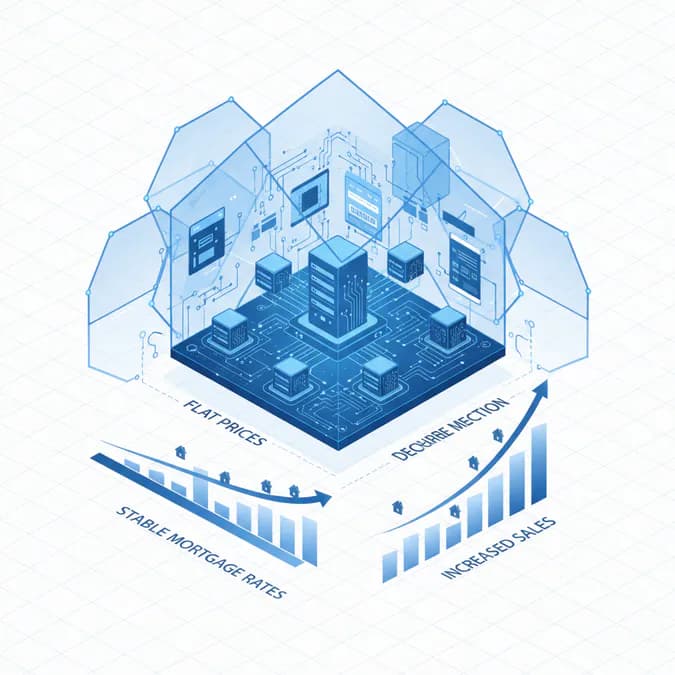
The U.S. housing market is poised for a significant shift in 2026, moving away from the pandemic-era extremes that have defined the past four years. According to Compass Real Estate, the nation's largest residential brokerage, the 2026 housing market outlook will mark a turning point characterized by stabilized home prices, moderating mortgage rates, and renewed sales activity. This comprehensive outlook reveals what homebuyers, sellers, and investors should expect as the market enters a new phase of balance and sustainability.
Home prices are expected to flatten with a modest 0.5% rise in 2026, a dramatic departure from the double-digit appreciation seen during the pandemic boom. Mortgage rates are projected to average 6.4%, ranging between 5.9% and 6.9%, while existing home sales are forecast to grow 5% to reach 4.25 million transactions. These projections signal a return to normalcy after years of market volatility, inventory shortages, and affordability challenges that have constrained both buyers and sellers.
Mike Simonsen, Chief Economist at Compass, emphasizes the significance of this transition: "2026 will mark a turning point for the U.S. housing market, entering a new phase in which home sales grow as inventory and wages rise, while prices remain flat." This balanced market environment represents a fundamental shift from the supply-constrained conditions that have dominated recent years.
Understanding these projections is essential for anyone involved in the housing market. Whether you're a first-time homebuyer evaluating affordability, a current homeowner considering selling, or an investor assessing market opportunities, the 2026 housing market outlook provides crucial context for decision-making. This article explores each component of the forecast in detail, examining what flat prices, moderate mortgage rates, and growing sales volumes mean for different market participants.
Home Price Projections: The Era of Flat Appreciation
The forecast of 0.5% home price appreciation in 2026 represents a seismic shift from the pandemic era. Between 2020 and 2022, home prices surged by double digits annually, with some markets experiencing appreciation exceeding 20% per year. This explosive growth created significant affordability challenges and locked many potential buyers out of the market enti

The flattening of home prices in 2026 stems from several converging factors. First, inventory is gradually recovering as the "lock-in" effect diminishes. During the pandemic, homeowners with sub-3% mortgage rates had little incentive to sell and refinance at higher rates. As of 2026, approximately 20% of mortgages now exceed 6%, reducing this lock-in effect and encouraging more homeowners to list their properties. Compass forecasts 10% national inventory growth in 2026, providing buyers with more options and preventing the supply-driven price escalation of recent years.
Second, wage growth is beginning to outpace home price growth for the first time in years. This income acceleration improves affordability metrics and reduces the urgency for prices to continue climbing. When incomes rise faster than prices, the market naturally stabilizes as the relationship between earnings and housing costs becomes more sustainable.
Third, the psychological shift from pandemic-era urgency to normal market conditions is reducing competitive bidding pressures. Multiple-offer situations and above-asking-price sales, which were commonplace in 2021-2023, are becoming less frequent. This normalization allows prices to stabilize without the artificial inflation created by extreme competition.
For sellers, flat price appreciation means that 2026 is not a year to expect significant equity gains from price appreciation alone. However, it also signals market stability and predictability, which can be valuable for long-term planning. For buyers, the end of rapid appreciation creates a more favorable environment for negotiation and reduces the pressure to purchase immediately.
Mortgage Rate Forecast: Settling in the Mid-6% Range
The projected average mortgage rate of 6.4% for 2026, with a range of 5.9% to 6.9%, represents a stabilization after years of volatility. Mortgage rates have been a primary driver of housing affordability challenges, and the forecast suggests rates will remain elevated compared to the pandemic lows but stable compared to recent fluctuations.
Mike Simonsen notes the importance of this stability: "If they stay in the low sixes, that is roughly what our forecast is. And that means that sales can grow a little bit. Prices are kept [flat] there's sufficient inventory so that prices are capped." This statement underscores how mortgage rates directly influence both sales volume and price dynamics.
For context, 30-year fixed-rate mortgages dropped below 6% for the first time since 2022 in February 2026, signaling the beginning of this stabilization period. This rate environment is substantially higher than the sub-3% rates available during the pandemic, which significantly impacts monthly mortgage payments. On a $400,000 home purchase, the difference between a 3% and 6.4% mortgage rate translates to approximately $800 more per month in principal and interest payments.
The stability of rates in the mid-6% range has several implications:
- It allows buyers to plan with greater certainty, knowing that rates are unlikely to spike dramatically higher or fall dramatically lower.
- It encourages homeowners with higher-rate mortgages to consider refinancing opportunities if rates dip toward the lower end of the projected range.
- It supports the sales growth forecast, as rates that are stable—even if elevated—are preferable to rates that are volatile or rising.
For buyers evaluating affordability, the 6.4% average rate should be used as a baseline for mortgage calculations. Lenders typically require that monthly housing costs not exceed 28% of gross monthly income, so understanding the payment implications of this rate environment is essential for determining realistic purchase budgets.
Home Sales Growth: The 5% Increase to 4.25 Million
The forecast of 5% growth in existing home sales, reaching 4.25 million transactions in 2026, represents a meaningful recovery from the depressed sales volumes of 2024-2025. To understand the significance of this projection, it's important to recognize that existing home sales have hovered at levels not seen since 1995, reflecting the severe constraints of recent years.
Russell Price, Chief Economist at Ameriprise Financial, confirms this growth trajectory: "Overall, we forecast the market to grow by about 5% with prices generally flat year-over-year." This alignment between Compass and Ameriprise forecasts suggests broad consensus among major financial institutions about the direction of the market.
The 5% growth in sales volume is driven by several factors working in concert:
- Improving inventory levels provide buyers with more choices, reducing the urgency to purchase the first available property.
- Stabilizing mortgage rates reduce uncertainty about future borrowing costs.
- Improving affordability metrics, as wages outpace prices, expand the pool of qualified buyers.
- The psychological shift from pandemic-era panic buying to normal market conditions allows for more deliberate purchasing decisions.
This sales growth is particularly significant for real estate professionals, as it signals increased market activity and transaction opportunities. For sellers, growing sales volumes suggest that properties will move more quickly and attract more qualified buyers. For buyers, increased inventory and sales activity mean more negotiating power and less pressure to make hasty decisions.
The 4.25 million transaction forecast should be understood in context. During the pandemic peak in 2021, existing home sales reached approximately 6.1 million units. The 2026 forecast of 4.25 million represents a recovery from depressed 2024-2025 levels but remains below pandemic peaks. This suggests a market that is normalizing rather than booming—a sustainable trajectory that avoids the extremes of both shortage and oversupply.
Return to Normal: Post-Pandemic Market Dynamics
The overarching theme of the 2026 housing market outlook is normalization after four years of extremes. The pandemic created unprecedented market conditions: record-low inventory, explosive price appreciation, historically low mortgage rates, and frenzied buyer competition. These conditions were unsustainable and have gradually given way to more balanced dynamics.
The normalization process involves several key shifts. First, inventory is recovering. National inventory growth of 10% in 2026 represents a significant increase from the critically low levels of 2021-2023. This recovery is evidenced by real-time data showing listings rising 3.4% year-over-year in January 2026, with median days on market at 46 days—a more typical timeframe than the 10-15 days common during the pandemic boom.
Second, price appreciation is moderating. The 0.5% forecast represents a fundamental shift from the 10-15% annual appreciation of 2021-2022. While this may disappoint investors who benefited from rapid appreciation, it creates a more sustainable market where prices align with underlying economic fundamentals rather than supply-driven speculation.
Third, buyer power is gradually returning. As inventory increases and prices stabilize, buyers regain negotiating leverage. The days of bidding wars and waiving inspections are fading, replaced by more traditional negotiation dynamics. This shift benefits buyers but requires sellers to adjust expectations about pricing and terms.
Fourth, the lock-in effect is diminishing. With 20% of mortgages now exceeding 6%, homeowners are less constrained by the desire to preserve sub-3% rates. This encourages more listing activity and supports the inventory recovery forecast. As more homeowners list properties, the market becomes more liquid and efficient.
Compass's comprehensive outlook emphasizes that this normalization represents a positive development for long-term market health. Markets characterized by extreme price appreciation, low inventory, and high competition are inherently unstable and create affordability crises. A market with flat prices, growing inventory, and moderate sales growth is more sustainable and accessible to a broader range of buyers.
Implications for Different Market Participants
For Homebuyers: The 2026 housing market outlook is substantially more favorable than conditions in 2021-2023. Growing inventory means more properties to choose from, reducing the pressure to purchase the first available option. Stabilizing prices mean you're not racing against appreciation, and improving affordability metrics mean more buyers will qualify for financing. The 6.4% mortgage rate, while elevated compared to pandemic lows, is stable and predictable. First-time buyers should view 2026 as a more opportune time to enter the market than the previous three years, with less competition and more negotiating power.
For Home Sellers: The shift to a more balanced market requires adjusted expectations. Flat price appreciation means you shouldn't expect significant equity gains from price appreciation alone. However, growing sales volumes and improving inventory suggest that properties will attract qualified buyers and sell within reasonable timeframes. Sellers should focus on property condition, pricing competitiveness, and marketing effectiveness rather than relying on market appreciation to drive value.
For Real Estate Investors: The 2026 housing market outlook suggests a market focused on fundamentals rather than speculation. Investors should prioritize properties with strong rental yields and long-term appreciation potential rather than betting on rapid price appreciation. The stabilizing market provides opportunities to acquire properties at more rational valuations, supporting long-term wealth building through rental income and gradual appreciation.
Key Takeaways for 2026
The Compass Real Estate 2026 housing market outlook provides clear guidance for navigating the year ahead. Home prices are expected to appreciate just 0.5%, marking a dramatic slowdown from pandemic-era double-digit gains. Mortgage rates are projected to average 6.4%, providing stability after years of volatility. Existing home sales are forecast to grow 5% to 4.25 million transactions, reflecting a recovery from depressed 2024-2025 levels.
These projections collectively indicate a market returning to normal after four years of extremes. Inventory is recovering, prices are stabilizing, and sales activity is increasing. This balanced environment benefits buyers through increased choice and negotiating power, supports sellers through growing transaction volumes, and provides investors with more rational valuations for long-term wealth building.
The significance of this transition cannot be overstated. The pandemic-era housing market was characterized by scarcity, urgency, and rapid appreciation—conditions that benefited sellers and investors but created barriers for buyers. The 2026 housing market outlook suggests a fundamental rebalancing toward a market where supply and demand are more aligned, prices reflect underlying economic fundamentals, and both buyers and sellers have reasonable opportunities to achieve their goals.
As you evaluate your housing decisions for 2026, use these projections as a framework for understanding market dynamics. Whether you're buying, selling, or investing, the normalized market conditions forecast by Compass and other major financial institutions suggest a more predictable and sustainable environment than the pandemic-era extremes. This stability, while perhaps less exciting than rapid appreciation, provides the foundation for long-term housing market health and accessibility for a broader range of Americans.
Frequently Asked Questions
What is the expected home price change in 2026?
Home prices are projected to appreciate by just 0.5% in 2026, indicating a shift from the rapid increases seen in previous years.
What will mortgage rates look like in 2026?
The average mortgage rate is expected to be around 6.4%, stabilizing after years of volatility.
How many home sales are projected for 2026?
Existing home sales are forecast to grow by 5%, reaching approximately 4.25 million transactions.
What does the 2026 housing market outlook mean for buyers?
Buyers can expect a more favorable market with increased inventory, stable prices, and improved negotiating power.
What should sellers know about the 2026 market?
Sellers should adjust their expectations regarding price appreciation and focus on property condition and competitive pricing.